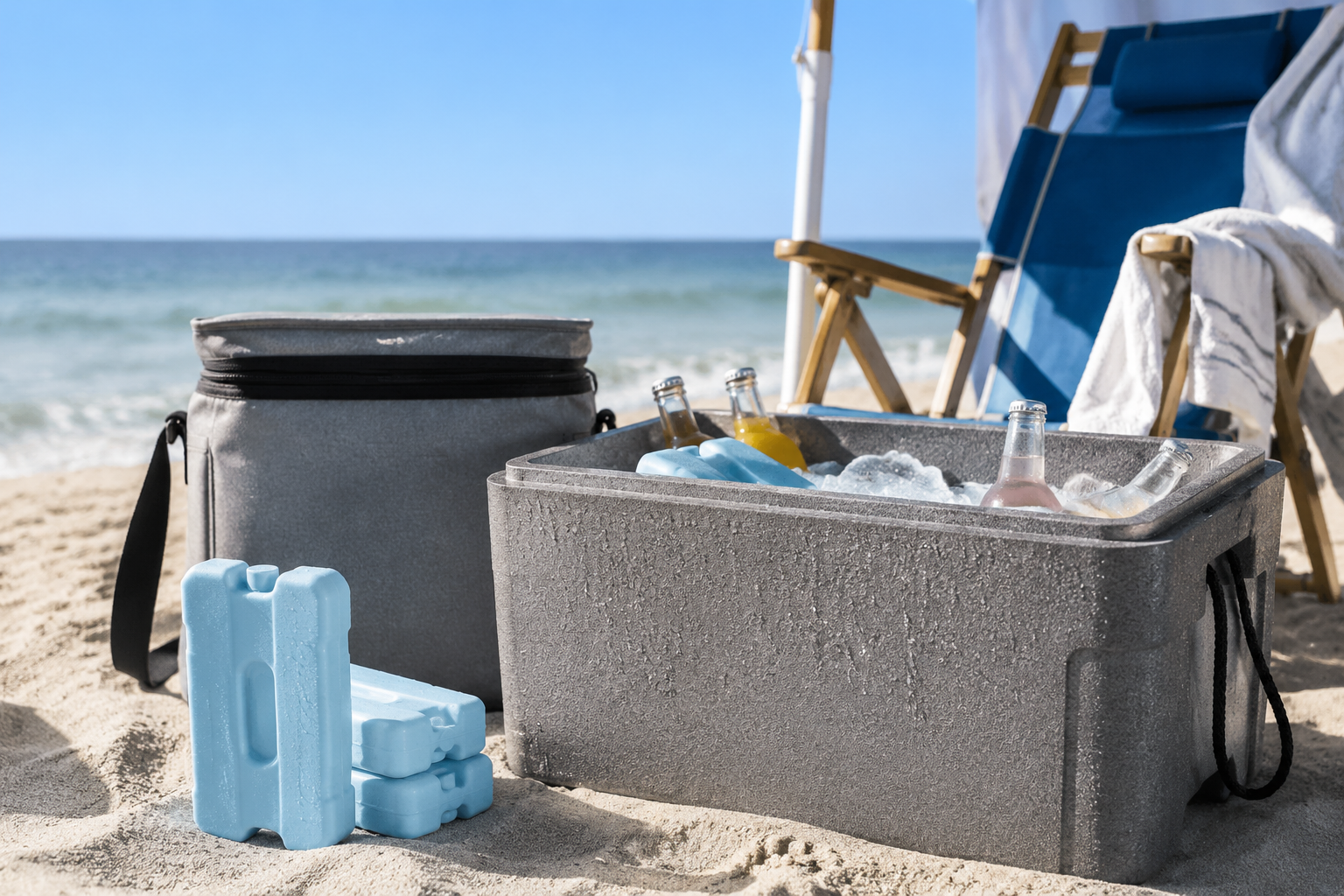
Beach
Pick a hard cooler with a light shell and sand-shedding feet. Keep it shaded and closed — sun and open lids are the enemies of ice.
Everything that actually moves the needle on keeping things cold — from pre-chilling to ice ratios to reading retention numbers honestly.
Pre-chill everything
A warm cooler steals cold from your ice. Chill the cooler overnight and pack already-cold food and drinks — never warm.
Keep a tight ice ratio
Aim for roughly two parts cold contents to one part ice by volume. More ice and fewer air gaps mean longer hold times.
Block, don't cube, for the long haul
Block ice and frozen gel packs last far longer than loose cubes. Use cubes to fill gaps around them.
Stay out of the sun and stay closed
Shade the cooler and open the lid as little as possible. Every open lid swaps cold air for warm.
How to read cold-retention numbers
Cold-retention times are objective estimates measured under controlled conditions and vary with ambient temperature, pre-chilling, ice ratio, and how often the lid is opened.Treat any "holds ice for X days" figure as a controlled-condition estimate, not a guarantee — your mileage depends on heat, pre-chill, and lid discipline.
Match the build to the day. Here's the short list for each scene.
Pick a hard cooler with a light shell and sand-shedding feet. Keep it shaded and closed — sun and open lids are the enemies of ice.
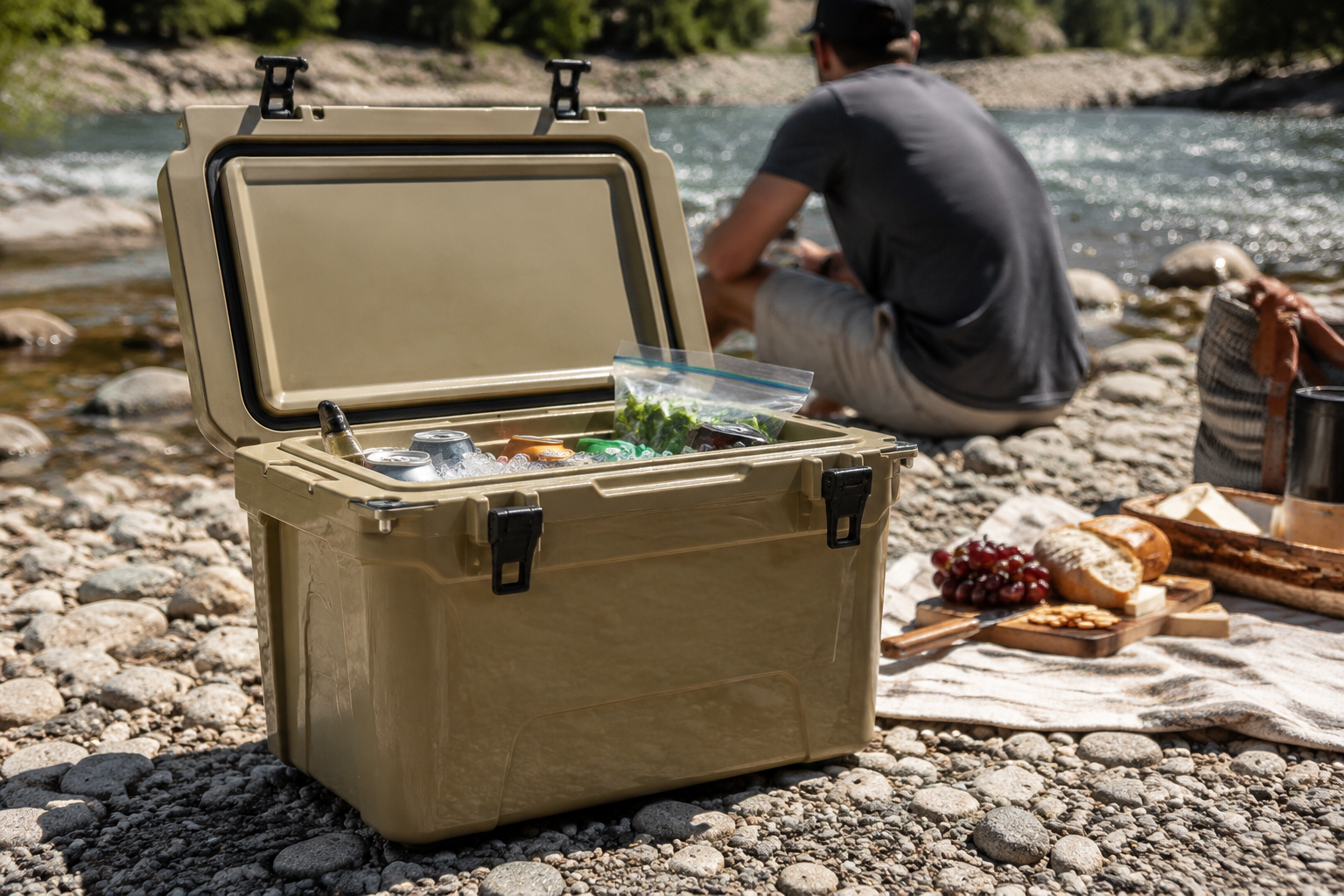
Maximize retention with a thick-walled cooler, a tight ice ratio, and a divider tray to keep food dry. Tie it down for the drive in.
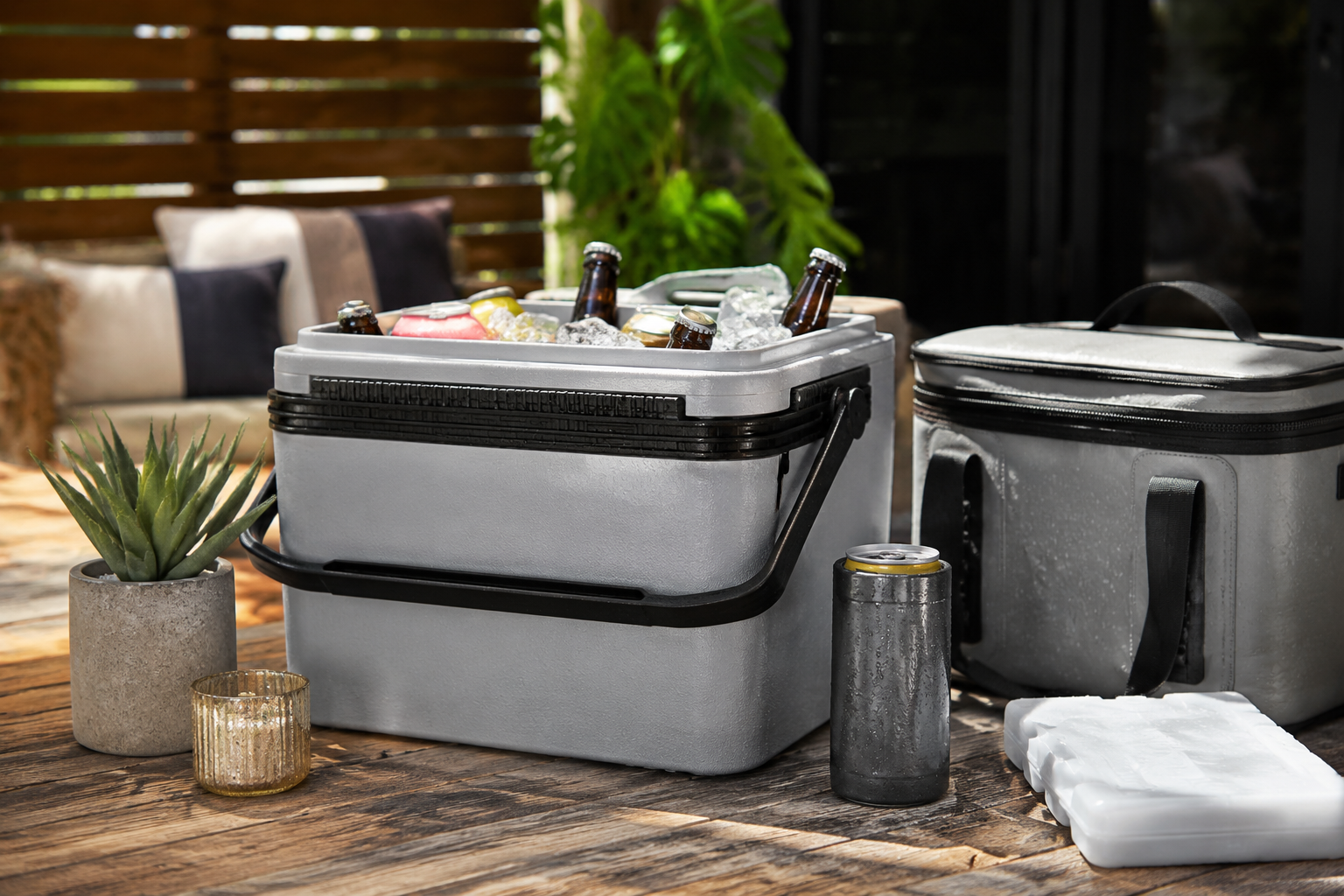
Go for can count and easy access. A soft 30-can bag plus steel cubes keeps drinks cold without watering them down.
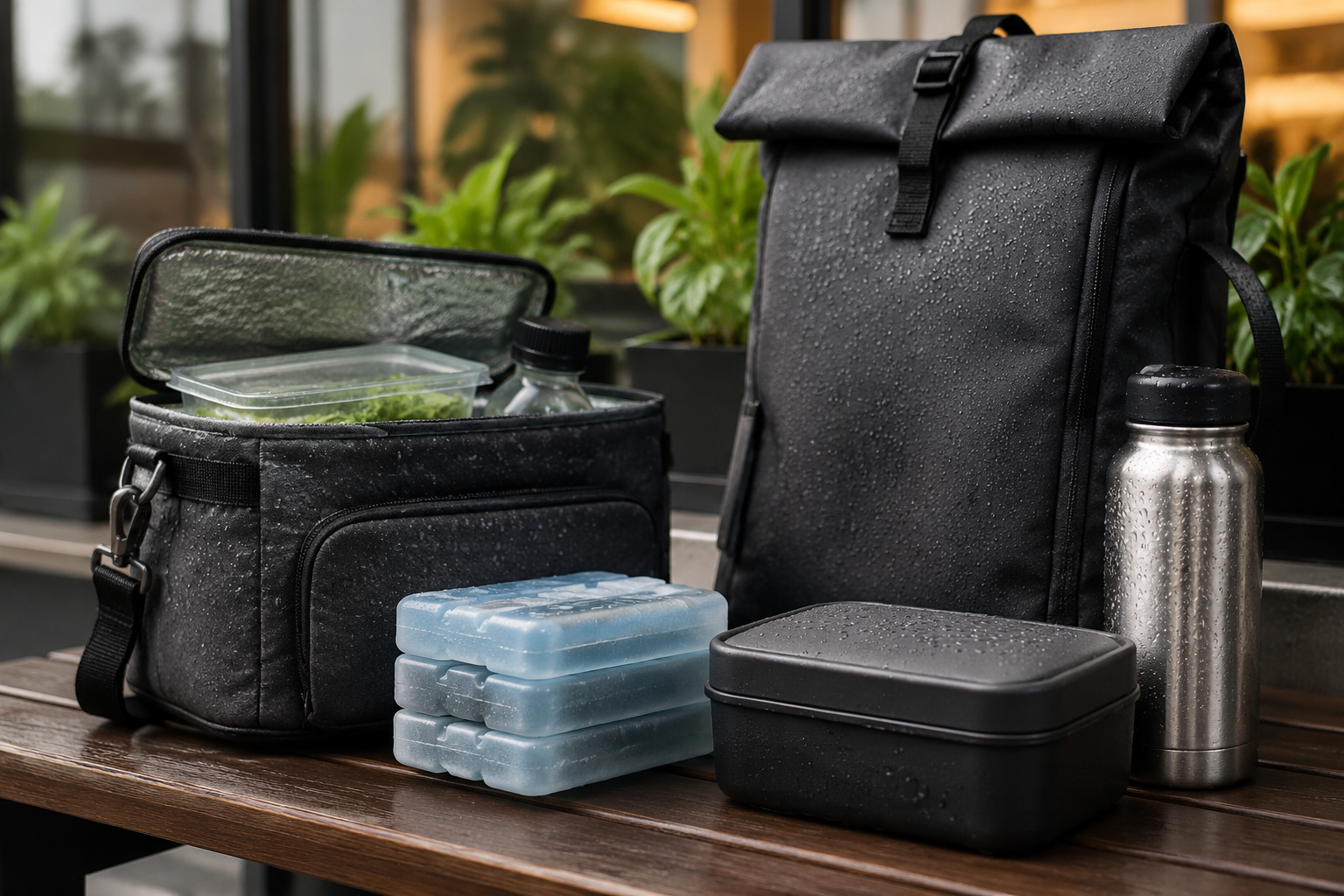
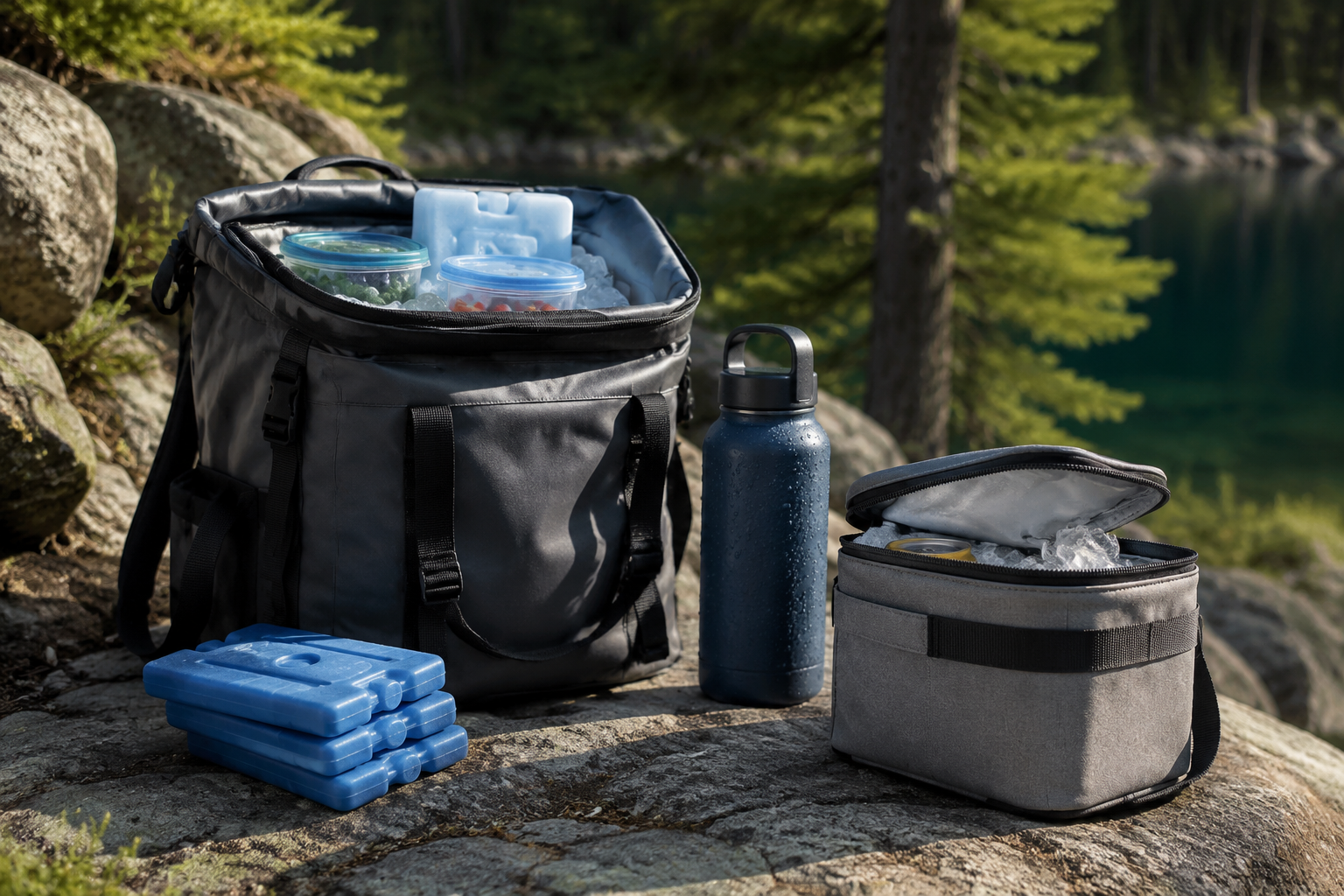
Lean and leak-resistant wins. A personal cooler or insulated tote with slim ice packs covers lunch and a desk fridge run.
Food-contact safety
Food-contact items (ice packs, ice cube trays, reusable cubes, bottle sleeves) are made from FDA / LFGB food-grade materials.
Ice packs are not food
Reusable ice packs and gel cubes are NOT food and are non-edible. Do not puncture, chew, or swallow the contents. Keep away from children and pets. If a pack is damaged or leaking, discard it — never consume the contents.
Start with a cooler, add a refreezable cold source, and finish with the accessories for your scene. All prices in USD.